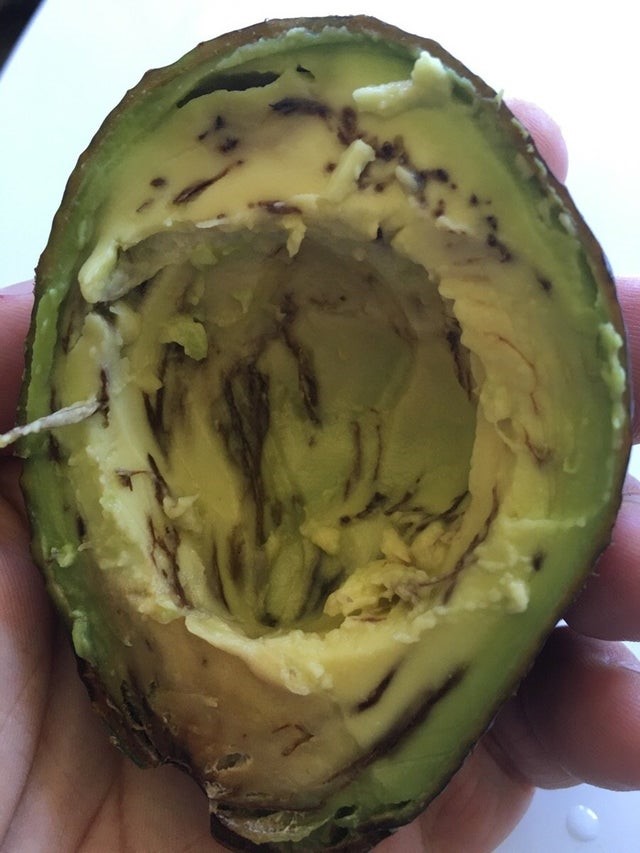
Similarly, the texture of an avocado may be stringy when it has spoiled. Still, if there are no other signs of rot, it’s not necessarily bad. A fibrous texture can also be attributed to growing conditions.
Off flavor or odor. Ripe avocados have a pleasant, slightly sweet aroma and somewhat nutty flavor. As the fruit spoils, it may develop an abnormal taste and odor.
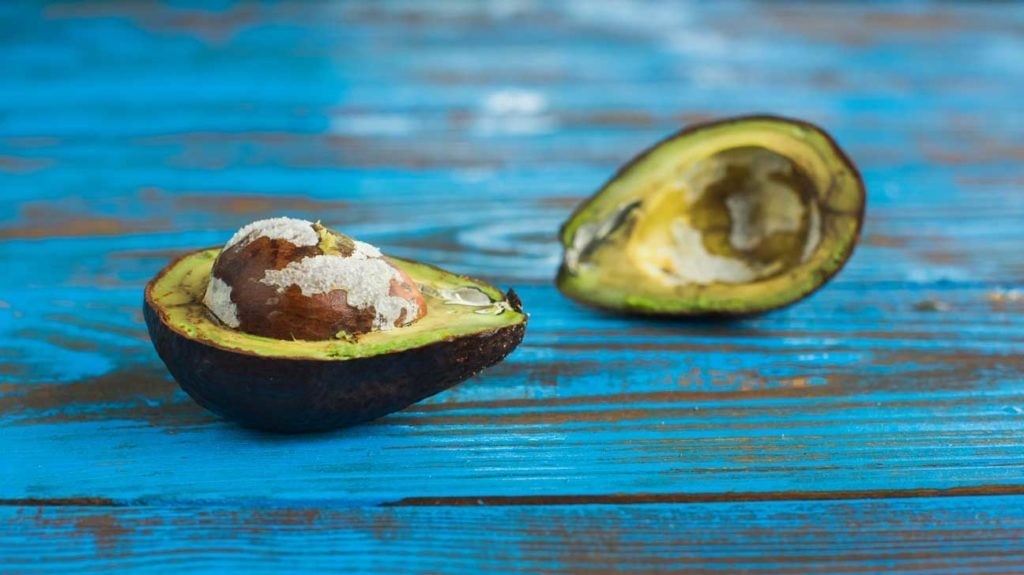
If it has a sour taste or smell, it may have bacterial spoilage and should be discarded. A chemical odor and taste may mean it’s rancid. This can happen when oxygen or microbes damage or break down the fruit’s unsaturated fat. Rancidity can result in the formation of potentially toxic compounds. Don’t eat an avocado if you think it’s rancid.
The flavor of spoiled avocados can vary, but it’s usually easy to tell upon taste whether they’re past their prime. Through smell, touch, visual inspection, and taste you can determine whether an avocado has spoiled. (OK, but taste would be my very last resort.)
Mold. Mold on avocados is generally white or gray and looks fuzzy. Don’t sniff it, as you may inhale mold spores and trigger breathing problems if you’re allergic to it.
Avoid buying avocados with mold on the exterior, as it can penetrate the flesh and cause decay.
If you cut open an avocado and see mold, discard the entire fruit. Though you may only see mold in one area, it can easily spread through the soft flesh. Don’t attempt to salvage it.
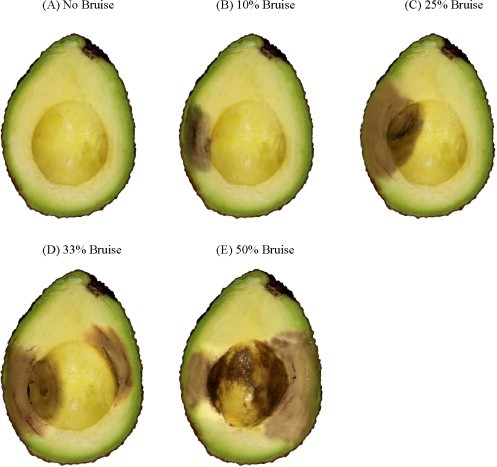
So then, how do I know that I may not need to toss my avocado? Basically, there’s just one scenario: If the dark spot on the flesh is from a bruise. If it still smells good, is firm-ish, there’s no mold or dark streaks, then it’s safe to eat. But I think this scenario is more common than we realize, and I’ve tossed a lot of just bruised, still-good-to-eat avocados in my day. Dang!