.
#1: Trouble Walking or Balancing
Here’s the most serious—and often overlooked—sign: difficulty walking. When the nerves controlling your legs and feet are affected, coordination falters. You may stumble, sway, or find stairs unusually challenging.
John, 61, thought he was “just getting clumsy.” But his B12 deficiency had begun damaging his spinal nerves. After treatment, his mobility improved, but the experience left him cautious.
If ignored for too long, nerve damage from B12 deficiency can become permanent.
Quick Overview: How B12 Affects the Body
| System Affected | What B12 Does | What Happens When Deficient |
|---|---|---|
| Blood | Builds red blood cells | Anemia, pale skin, fatigue |
| Nerves | Maintains myelin sheath | Tingling, weakness, balance loss |
| Brain | Supports neurotransmitters | Memory issues, depression |
| Heart | Aids oxygen transport | Dizziness, shortness of breath |
| Eyes | Protects optic nerve | Blurred vision |
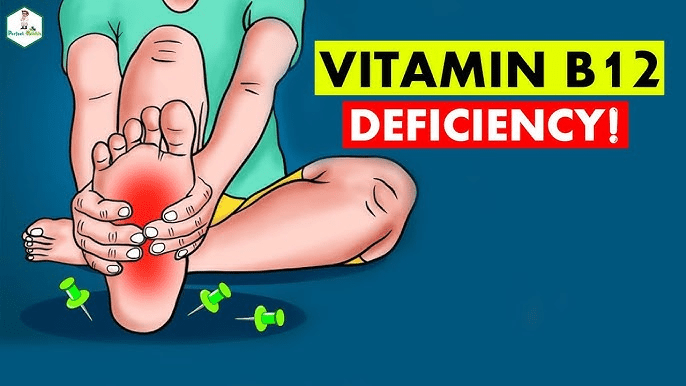
Why This Deficiency Is Often Missed
Doctors sometimes overlook B12 deficiency because its symptoms mimic other conditions: anemia, neuropathy, anxiety, even dementia. Blood tests can also show “normal” results while levels in your tissues are already low.
This is especially common in older adults, vegans, or anyone on long-term medication that reduces stomach acid.
You might be thinking, “I eat meat—I’m probably fine.” But absorption matters more than intake. If your stomach can’t extract B12 efficiently, no amount of steak will fix it.