Sponges: from microwave to boiling water, how to disinfect them and precautions to take

In the kitchen, there are little gestures we repeat automatically… and which sometimes conceal bigger questions. The sponge, for example: we rinse it, wring it out, and put it back on the edge of the sink, thinking we’re doing the right thing. Yet, behind its harmless appearance, it can become a veritable invisible breeding ground. Should we microwave it? Boil it? Or replace it more often than we think? Before changing your habits, there are a few truths worth knowing.

Why does the sponge so quickly become a breeding ground for microbes?

Unfortunately, the kitchen sponge ticks all the boxes for absolute comfort… for bacteria. It stays damp, absorbs food residue, and is handled several times a day. Its highly porous structure retains water and dirt, creating a perfect environment for rapid and invisible proliferation. According to Francesco Poliandri, a culinary consultant and food hygiene specialist, microorganisms settle deep within the fibers and form a kind of natural shield. The result: a simple rinse with clean water gives an illusion of cleanliness, but is absolutely insufficient. 

The most effective methods for disinfecting a sponge

When it comes to sanitizing a sponge, heat is your best friend. And the good news is: you already have everything you need at home.

The microwave is one of the most effective cleaning solutions. For best results, the sponge must be completely soaked in water. Then, place it in the microwave at full power for one minute. The steam generated will do the deep cleaning. Just be careful never to use a dry sponge or one containing metal parts.

The dishwasher is an excellent alternative. A complete cycle at high temperature, with drying, achieves a very similar result. Simply place the sponge in the top rack and start the program.

Finally, boiling water remains a reliable option. Soak the sponge in a pan of simmering water for about five minutes. It’s simple, economical, and remarkably effective for regular cleaning.

How often does it really need to be addressed?
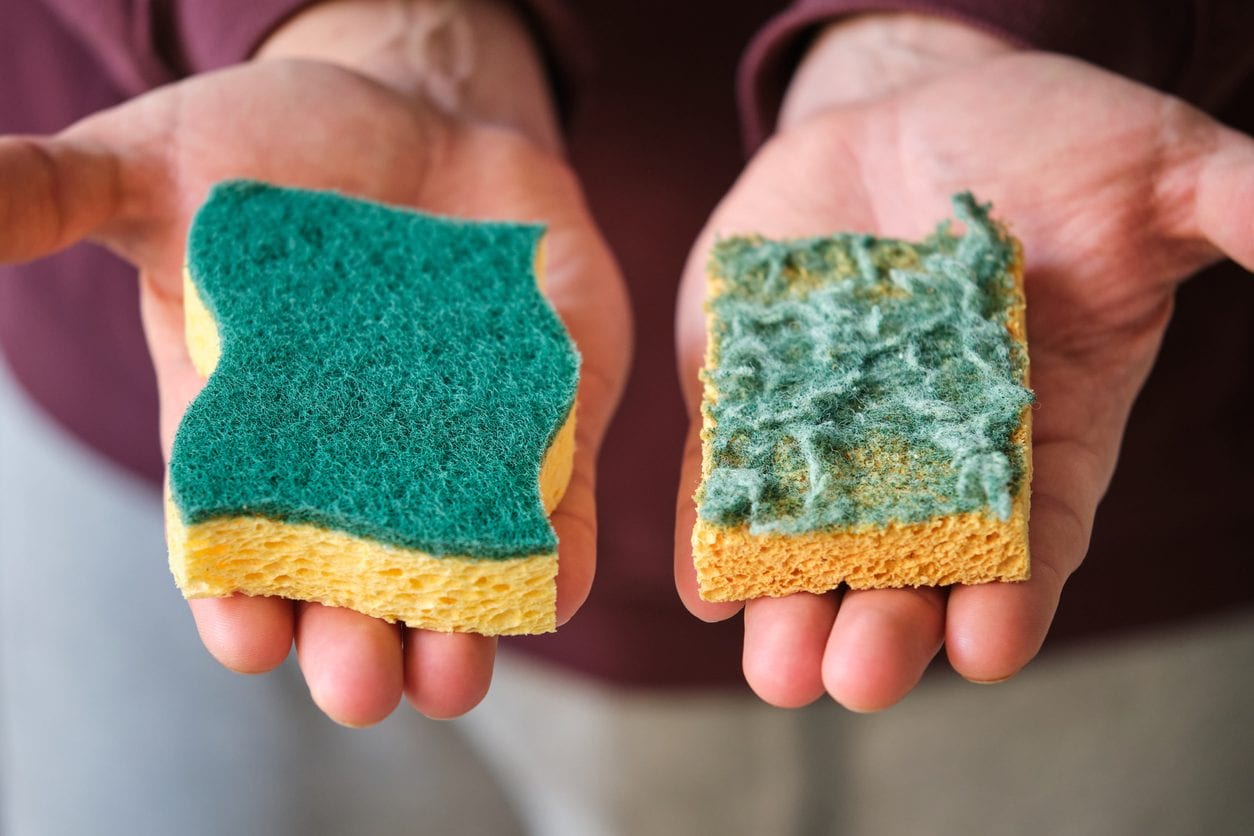
Ideally, disinfecting every two to three days is a good routine. As for replacement, it’s recommended to change your sponge every one to three weeks, depending on your usage. Even when perfectly clean, it will eventually wear out and lose its effectiveness. The telltale sign? A lingering odor, even after rinsing.

Recent Articles

My 9-year-old daughter baked 300 Easter cookies for the homeless — the next morning, a stranger showed up at our door with a briefcase full of cash. My daughter, Ashley, has always had a heart too big for her chest. Since my wife died, we’ve barely been making ends meet. We spent everything we had trying to save her from cancer. But when Easter came this year, Ashley told me she’d been saving up her own money to buy ingredients. “For the homeless,” she said. Her mom used to be one of them. She was thrown out by her parents when they found out she was pregnant with Ashley. When I met her, she had nothing — but she had the brightest smile and the sharpest mind I had ever seen. I fell in love with her. I took her and Ashley in. And from that moment on, Ashley became my daughter in every way that matters. So when Ashley said she wanted to help people like her mom once was… I didn’t stop her. For three nights straight, after school and homework, she baked. Her little hands worked nonstop. She found her mom’s old cookie recipe. She rolled every piece of dough herself. She decorated every cookie. She made three hundred cookies. On Easter, she handed them out one by one. She looked people in the eyes. She wished them a Happy Easter. Some of them smiled. Some of them cried. I stood there thinking it was the proudest moment of my life. I thought that was the end of it. The next morning, I was washing a mountain of dishes when the doorbell rang. I opened the door. An older man stood there in a worn-out suit, holding a scratched aluminum briefcase. His eyes were locked on Ashley. Before I could ask anything, he set the case down and opened it. I froze. Stacks of hundred-dollar bills — more money than I had ever seen in my life. “I saw what your daughter did yesterday,” he said, his voice shaking. “I want to give all of this to her.” My heart skipped. Then he added: “But you have to agree to ONE CONDITION.” My chest tightened. “What condition?” I asked. He stepped closer. He lowered his voice. And what he asked for in return made my blood run cold.

Leave a Reply

Your email address will not be published. Required fields are marked *